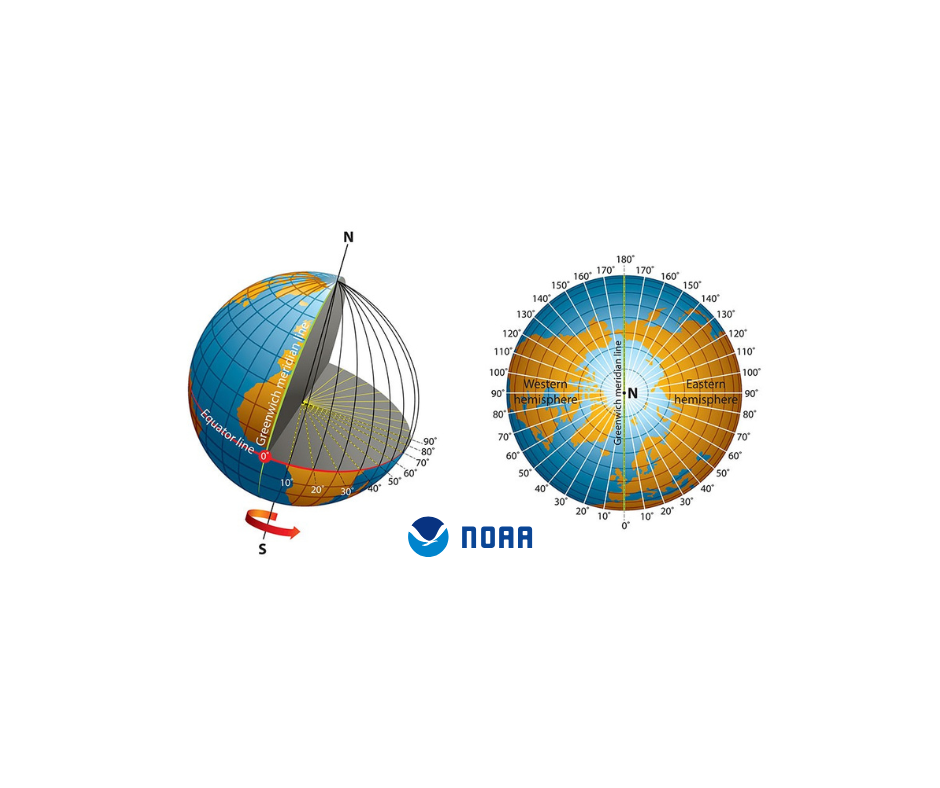
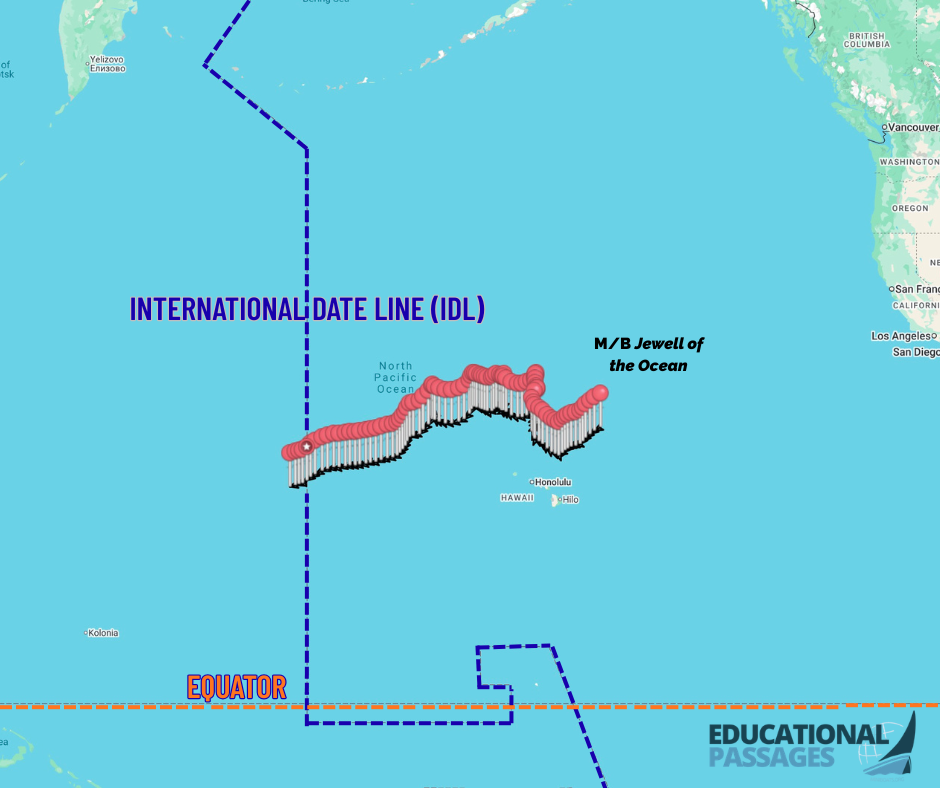
Far out in the middle of the Pacific Ocean lies an invisible boundary: the 180th meridian, otherwise known as the International Date Line (IDL). This line of longitude is located exactly opposite the Prime Meridian (0°), and together they divide Earth into the Eastern and Western Hemispheres — where one calendar day ends and the next begins, depending on your direction of travel.
Photo credit: National Oceanic and Atmospheric Administration (NOAA)
While there’s no physical marker in the water, crossing the International Date Line has long carried special meaning for those at sea and has fascinated sailors, explorers, and navigators for generations. That same spirit of discovery and maritime history continues today with student-built miniboats launched into the Pacific Ocean!
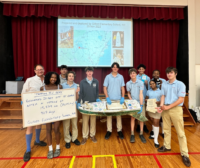
When vessels like Jewel Elementary School’s M/B Jewell of the Ocean cross the IDL, they are not just reaching an exciting geographic milestone. They are following in the wake of legendary ocean explorers while inspiring the next generation to travel, discover, and dream bigger than themselves.
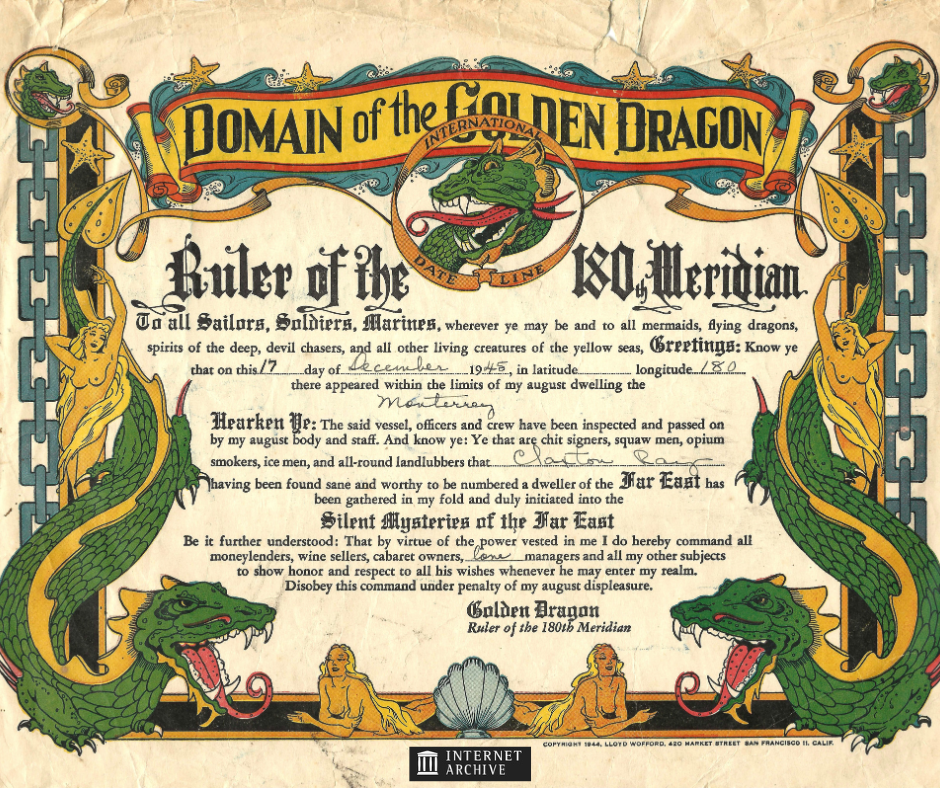
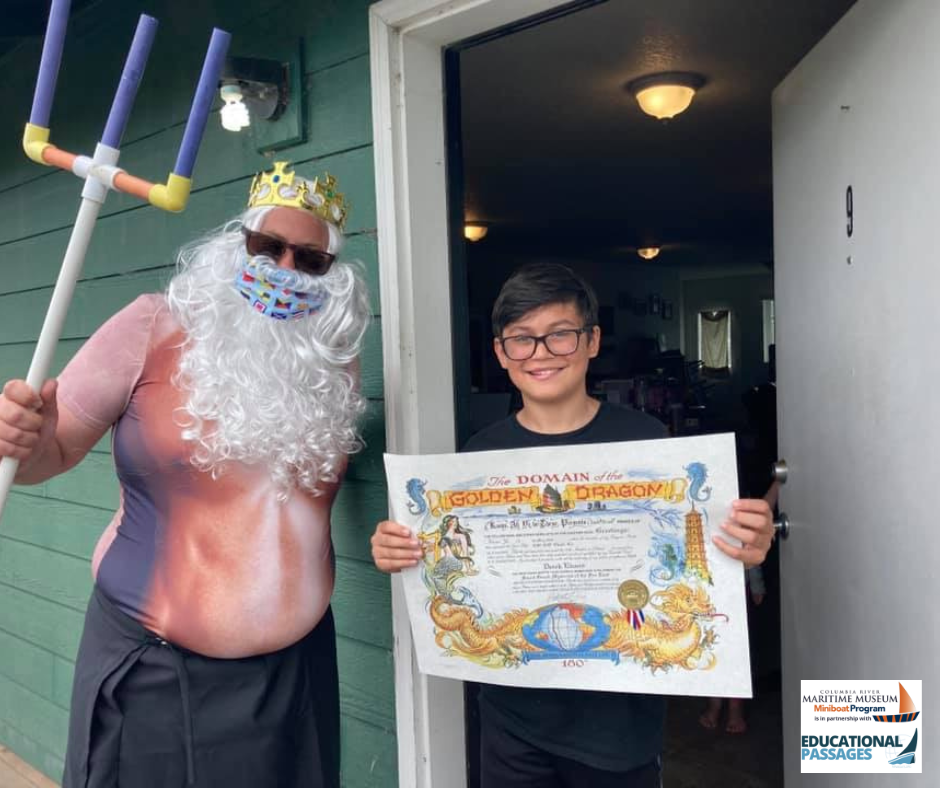
An unofficial, yet highly regarded, naval tradition refers to crossing the Pacific over the IDL as “Entering the Domain of the Golden Dragon.” Sailors who complete the crossing are often honored as “Golden Dragons,” joining a long-standing seafaring tradition tied to exploration, endurance, and adventure. An example of a traditional “Domain of the Golden Dragon” certificate can be found through the Internet Archive:
Although M/B Jewell of the Ocean is not the first vessel in the Educational Passages’ fleet to cross the IDL — that honor belongs to M/B Jackalope in 2017 — it is the most recent, officially crossing on May 16, 2026. The occasion gave us a chance to reflect on the many student-built vessels that have made this incredible journey across the Pacific over the years, including Nishi Kaze in 2018; Liberty, Philbert, and Go! Go! Okuki Go in 2020; Butterfly of the Sea in 2023; Tidestrider in 2024; and Hesperia in 2025, to name just a few.
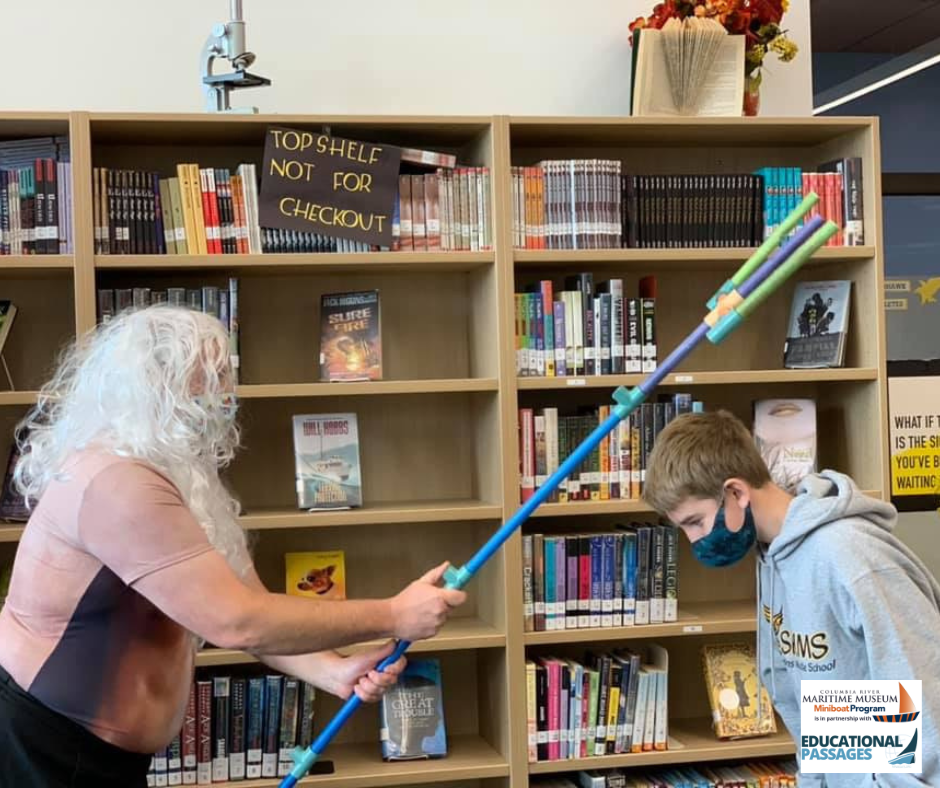
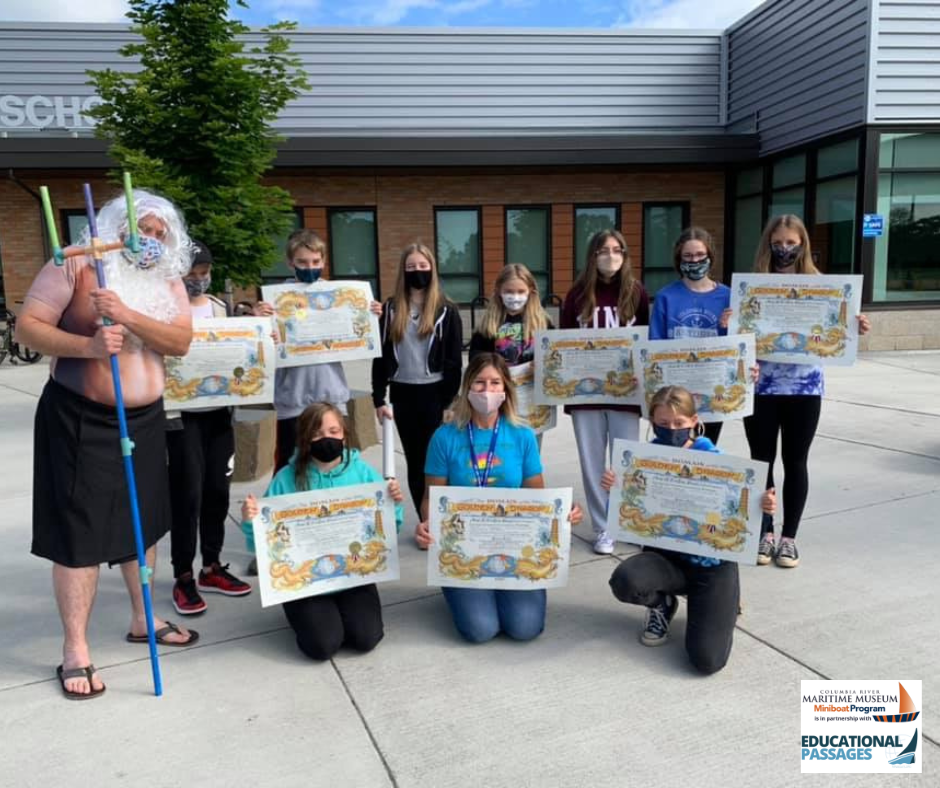
These crossings have also created unforgettable opportunities for student engagement and celebration. During the COVID-19 pandemic, students who could not gather in person still found ways to celebrate the achievements of their boats virtually and creatively. Nate Sandel, when leading the Miniboat Program at the Columbia River Maritime Museum (CRMM) embraced maritime traditions by visiting students as “King Neptune,” presenting Domain of the Golden Dragon certificates, and holding special ceremonies to honor their miniboats’ accomplishments. Officially inducting the student builders into the long-standing seafaring tradition.
These moments help transform ocean science and geography into something personal, memorable, and exciting. Miniboats carry student learning far beyond the classroom. Built by students, launched into the ocean, and tracked across thousands of miles, these small vessels become part of a much bigger story — one that connects science, geography, culture, maritime tradition, and global exploration. And somewhere out on the Pacific Ocean, as tiny boats continue their voyages into the Domain of the Golden Dragon, a new generation of explorers is sailing right alongside them. 🌊🐉
Educational Passages is a 501c3 non-profit organization with a mission is to connect people around the world to the ocean and each other through unique global experiences. Please consider making a donation, joining us to empower students to become citizen scientists and global ocean stewards.
Join us in our mission to connect people around the world to the ocean and each other! We need your help so that together we can continue to inspire students, support educators, and connect communities.